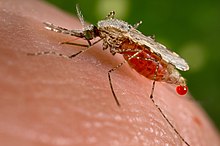
Malaria is a disease caused by a parasite, transmitted by the bite of infected mosquitoes. Malaria produces recurrent attacks of chills and fever. Malaria kills an estimated 1 million people each year worldwide.
While the disease is uncommon in temperate climates, malaria is still prevalent in tropical and subtropical countries. World health officials are trying to reduce the incidence of malaria by distributing bed nets to help protect people from mosquito bites as they sleep. Scientists around the world are working to develop a vaccine to prevent malaria.
If you're traveling to locations where malaria is common, take preventive medicine before, during and after your trip. Many malaria parasites are now immune to the most common drugs used to treat the disease.

Causes :-
Malaria is caused by a bite from a mosquito infected with parasites. In very rare cases, people can get malaria if they come into contact with infected blood. A developing fetus may get the disease from its mother. You cannot get malaria just by being near a person who has the disease.
There are many different types of plasmodium parasite, but only five types cause malaria in humans. These are:
- Plasmodium falciparum – mainly found in Africa, it is the most common type of malaria parasite and is responsible for most malaria deaths worldwide.
- Plasmodium vivax – mainly found in Asia and South America. This parasite causes milder symptoms than Plasmodium falciparum, but it can stay in the liver for up to three years, which can result in relapses.
- Plasmodium ovale – fairly uncommon and usually found in West Africa. It can remain in your liver for several years without producing symptoms.
- Plasmodium malariae – this is quite rare and usually only found in Africa.
- Plasmodium knowlesi – this is very rare and found in parts of South East Asia.
Symptoms :-
Symptoms of malaria include fever, headache, and vomiting, and usually appear between 10 and 15 days after the mosquito bite. If not treated, malaria can quickly become life-threatening by disrupting the blood supply to vital organs. In many parts of the world, the parasites have developed resistance to a number of malaria medicines.
Most malaria infections cause symptoms like the flu, such as a high fever, chills, and muscle pain. Symptoms tend to come and go in cycles. One type of malaria may cause more serious problems, such as damage to the heart, lungs, kidneys, or brain. It can even be deadly.
Home Treatments :-
Grapefruit : Grapefruit is one of the most effective home remedies for malaria. It should be taken daily. It contains a natural quinine-like substance which can be extracted from the fruit by boiling a quarter of a grapefruit and straining its pulp.
Fever Nut : The seeds of the fever nut plant are another effective remedy for malaria. They can be obtained from a herbal store and preserved in a phial for use when required. About six grams of these seeds should be given with a cup of water two hours before the expected onset of the paroxysm of fever, and a second dose should be given one hour after the attack. The paroxysm can thus be avoided but even if it occurs, the same procedure should be resorted to on that day and it will cut short the fever.
Datura : The leaves of the datura plant are useful in the tertian type of malarial fever. About two and a half freshly-sprouted leaves of this plant should be made into a pill by rubbing them with jaggery and administered two hours before the onset of the paroxysm.
Cinnamon : Cinnamon is regarded as a valuable remedy in malaria. One teaspoon should be coarsely powdered and boiled in a glass of water with a pinch of pepper powder and honey. This can be used beneficially as a medicine in malaria.
Chirayata : The herb chirayata, botanically known as Swertia andrographis paniculata, is also beneficial in the treatment of intermittent malarial fevers. It helps in lowering the temperature. An infusion of the herb, prepared by steeping 15 gm of chirayata in 250 ml of hot water with aromatics like cloves and cinnamon, should be given in doses of 15 to 30 ml.
Lime and Lemon : Lime and lemon are valuable in the quartan type of malarial fever. About three grams of lime should be dissolved in about 60 ml of water and the juice of one lemon added to it. This water should be taken before the onset of the fever.
Alum : Alum is also useful in malaria. It should be roasted over a hot plate and powdered. Half a teaspoon should be taken about four hours before the expected attack and half a teaspoon every two hours after it. This will give relief.
Holy Basil : The leaves of holy basil are considered beneficial in the prevention of malaria. An infusion of a few leaves can be taken daily for this purpose. The juice of about eleven grams of leaves of holy basil mixed with three grams of powder of black pepper can be taken beneficially in the cold stage of the malarial fever. This will check the severity of the disease.
Diet for Malaria
Fast on Orange Juice and Water for Few Days :
Diet is of utmost importance in the treatment of malaria. To begin with, the patient should fast on orange juice and water for a few days, depending on the severity of the fever.
Fresh-Fruit Diet :
After the fever has subsided, the patient should be placed on an exclusive fresh-fruit diet for the first few days. Milk may then be added to the diet.
Well-balanced Diet, Emphasis on Fresh Fruits, and Raw Vegetables :
Thereafter, the patient may gradually embark upon a well-balanced diet of natural foods, with emphasis on fresh fruits, and raw vegetables.
Suggestion for Malaria treatment
Warm-Water Enema :A warm-water enema should be administered daily during the juice and water fast to cleanse the bowels.
Cold Pack Application to Whole Body :
The best way to reduce temperature naturally during the course of the fever is by means of a cold pack, which can be applied to the whole body. This pack is made by wringing out a sheet or any other large square piece of linen material in cold water, wrapping it right round the body and legs of the patient (twice round would be best), and then covering it completely with a small blanket or similar warm material. This pack should be applied every three hours during the day while the temperature is high and kept on for an hour or so. Hot-water bottles may be kept on the feet and against the sides of the body.
Prevent Mosquito Bites, Cleanliness of Surrounding Areas :
Malaria can be prevented by protection against Malaria can be prevented by protection against mosquito bites, cleanliness of surrounding areas, and ensuring that there is no pool of SL.1.gnant water lying around. , and ensuring that there is no pool of stagnant water lying around.
Ayurvedic Treatment :-
Neem as a cure for malaria :
Neem is a natural produce derived from the flowers of ancient trees in remote parts of India. This revitalizing produce plays a very important part in Ayurvedic methods for healing and has almost holy status within the teachings.
This natural oil is full of natural goodness and can either be needed into a paste mixed in with a number of other herbs and spices and applied with a damp cloth to the afflicted area, or it can be added to a warm bath for the sufferer to luxuriate in.
This natural oil is full of natural goodness and can either be needed into a paste mixed in with a number of other herbs and spices and applied with a damp cloth to the afflicted area, or it can be added to a warm bath for the sufferer to luxuriate in.
Ayurvedic remedies for liver Infection :
As malaria is a liver infection these following herbal remedies can also be applied to the treatment of malaria.
Bhunimanala : Which is a juice taken from the plant. It can also be acquired in capsule form.
Ghritkumari : The Ghritkumari is a cactus rich in aloe and other vital revitalizing produce.
To attain the goodness for application in the Ayurvedic method, you should first core the plant until you reach the pulp. Then take a leaf from the pulp and take with added black pepper and ginger every morning for 10 days.
All these remedies will help mend the liver and make it more robust to see off the malaria carrying parasites.
Other Ayurvedic capsules used as remedy for liver disorder and malaria :
- Livegood
- Kumarisava
Ayurvedic diet for malaria :
You should stick to a strict diet of raw or well boiled fruit and vegetables to allow cleansing for the liver so that it can heal.
You should avoid spicy food and any foodstuff or ingestible liquid that causes great acidity when digested.
Yoga as malaria remedy :
Ayurveda recommends the shoulder stand yoga position to revitalize the liver area. This involves lying on the floor and pushing your legs straight up into the air.
Though like most Ayurvedic yoga you should not attempt this without the supervision of a qualified yoga instructor.
Though malaria is an unpreventable misfortune, the Ayurvedic philosophy can help you heal your liver properly to help it fight against the spread of the parasites and agaist further infection.
Homeopathic Treatment :-
Conventional Prophylaxis and Treatment :
Recommended prevention against mosquito bites includes wearing long sleeves and pants and light-colored clothes. and using DEET on exposed skin (controversial because of its toxicity) twenty minutes after applying sunscreen. Anti-malarial medication, usually quinine-based, can cause undesirable side effects, and is not necessarily the prophylaxis of choice for those who live, work, or spend a lot of time in high-risk areas, who would have to spend much of their lives taking them. Artemisinin, made from the sweet wormwood plant, now rivals quinine drugs in terms of its rapid effectiveness with malaria. The plants has been used by Chinese herbalists for over 1500 years to treat malaria. A watchful eye is advised because there is a black-market version that contains only chalk.
The most common anti-malarial drugs include Choroquine, Quinine sulfate, Hydroxychloroquine, Mefloquine, and Malarone. Drug-resistant malaria is a major ongoing obstacle to treatment and to the search for new, effective drugs. In many areas of the world, Chloroquine is considered ineffective because of it.
Homeopathic Medicines Used Historically for Malaria :
The following are single –dose homeopathic medicines used to treat malaria:
- Arsenicum album (Arsenic) : Intense fever with burning heat. Exhausted, pale. Unquenchable thirst for sips. Clean tongue. Anxious, restless. Cold.
- China officinalis (Peruvian bark, the source of quinine) : Periodic fevers. Chill, sweating, headache, nausea, weakness. Little thirst. Anxiety. Peruvian bark was the very first substances proved by homeopathy’s founder, Samuel Hahnemann, and made into a homeopathic medicine.
- Eupatorium peroliatum (Boneset) : Bone pain as if they will break. Muscle soreness, vomiting, chill. Thirst and bitter vomiting. Pressure forehead.
- Natrum muriaticum (Sodium chloride) : Violent headache. Chill begins at 10AM. Weak, short of breath, bone pain. Fever blisters lips. Great thirst.

No comments:
Post a Comment